The Ancient Treasure – Hasli
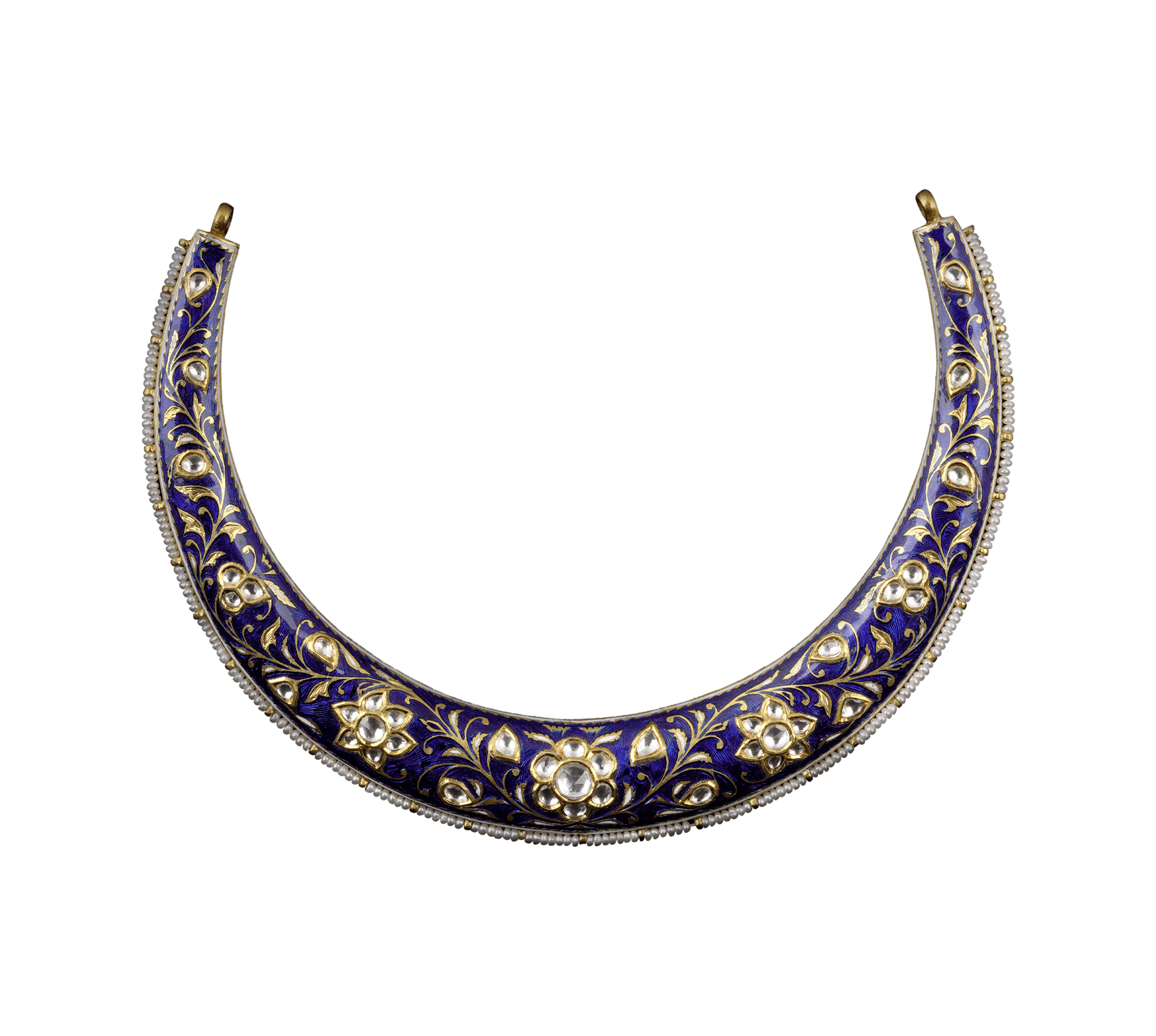
The Hasli Necklace
The Hasli derives its name from the Hindi word 'hansuli' meaning 'collar bone' because it rests on the collarbone of the wearer. The traditional Hasli is rigid and tapers towards the end in the form of a collar necklace. The Hasli is a rigid necklace from Southeast Asia that tapers towards the end, and rests on the collar. Examples of this type of necklace were seen as early as 300 BC and have evolved to currently include precious stones and elaborate enamelling. The hasli necklace is a significant part of Rajasthani and Marwari jewelry traditions.
Cultural Significance
The hasli necklace has historical and cultural significance, often worn by women during special occasions, weddings, and festivals. It is considered a symbol of tradition and is passed down through generations as an heirloom. The gold is more elaborate, often embellished with precious gems like rubies or turquoise and kundan. Hasli necklaces are often adorned with intricate designs and patterns — filigree work, geometric shapes, floral motifs, and other decorative elements. While traditionally a part of Indian ethnic attire, hasli necklaces have evolved to suit contemporary fashion, making them a versatile accessory.
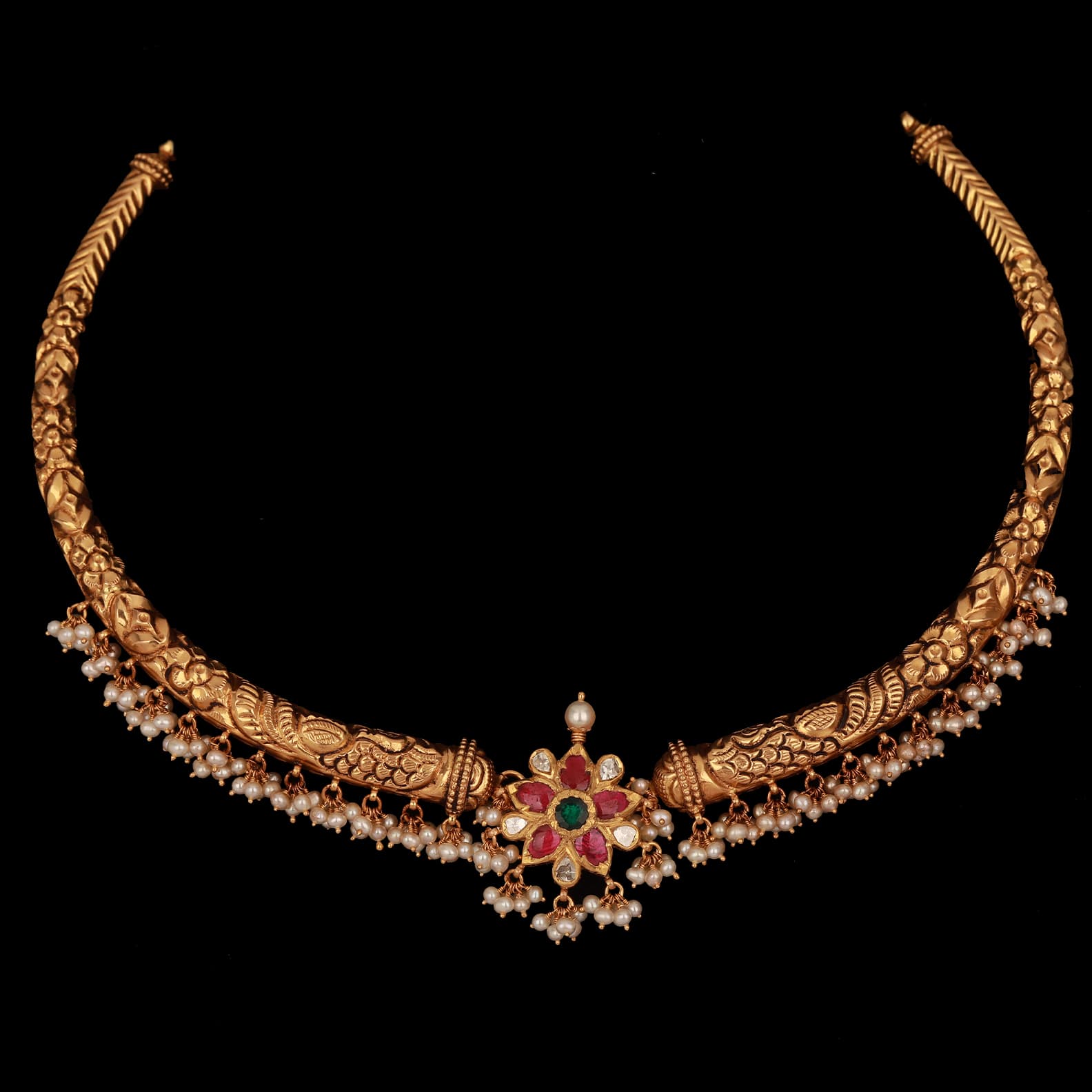
Kalasha Jewellery: K-GNK-3443
This hasli necklace from Kalasha Fine Jewels is beautifully crafted with traditional Nakshi motifs and set with Rubies, Emeralds, Kundans and pearls. The necklace is set in traditional pattern with contemporary elegance.